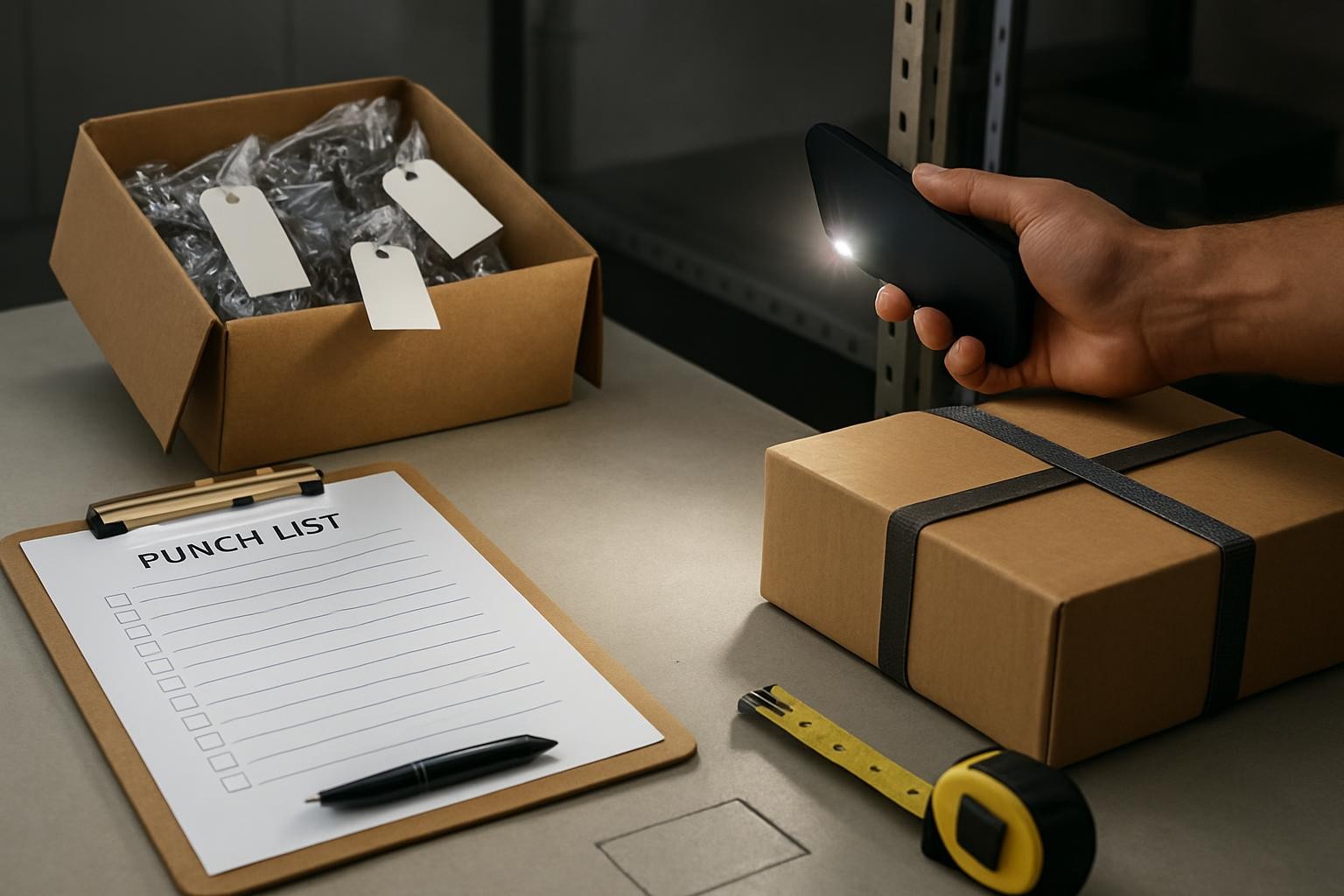
A construction punch list is one of the most important tools in the final phase of any building project. It captures what still needs to be fixed before a project can be formally accepted, and it directly affects how quickly a property moves from construction to revenue-generating status. For investors, project managers, and real estate stakeholders, understanding how a punch list works—and how to close it out without costly rework—can mean the difference between an on-time handover and an expensive delay.
Construction Punch List Explained: What It Is and Why It Matters at Closeout
A construction punch list is a formal record of incomplete, defective, or noncompliant work identified during inspections near the end of a project. It documents every outstanding item that must be corrected before the owner signs off on the work.
For investors and asset owners, the punch list matters because it defines the gap between “almost done” and “accepted.” Until those items are closed, the project is not fully deliverable, which can affect financing milestones, occupancy, and cash flow.
Where it fits in the project closeout and final acceptance timeline
The punch list typically appears once the work is substantially complete but before final acceptance. At this stage, the structure is functional, yet smaller defects and unfinished details remain.
Therefore, the punch list sits between substantial completion and final sign-off. It drives the remediation work that unlocks final payment, occupancy permits, and formal handover to the owner.
Punch List vs. Punch-Out: What Stakeholders Need to Know
These two terms are related but not identical. The punch list is the document—the itemized record of outstanding issues. Punch-out, on the other hand, is the activity: the final inspection and correction process during which those items are identified, fixed, and verified.
In short, the punch-out process produces and resolves the punch list. Stakeholders should track both the document and the activity, because the document shows what remains, while the process shows how quickly items are being cleared.
Construction Punch List Items: The Minimum Data to Include Every Time
A punch list is only as useful as the detail inside each item. Vague entries create confusion, slow remediation, and increase the risk of rework. To keep items actionable, every entry should include a consistent set of fields.
Issue description, exact location, responsible party, and required fix
First, each item needs a clear issue description that states exactly what is wrong. Next, it must include the exact location—room, system, or area—so the responsible crew can find it without guesswork.
Then, assign a responsible party so ownership is unmistakable. Finally, specify the required fix, describing the corrective action needed to bring the work into compliance.
Priority level, references to specs/drawings, target dates, and required proof
Beyond the basics, add a priority or severity level so teams know what to address first. Include references to specs or drawings so the standard is objective rather than subjective.
Additionally, set target dates to keep items moving, and define the required proof of completion—such as photos, test results, or sign-offs—so closure is based on evidence, not opinion.
How to Manage and Close Construction Punch List Items Step by Step
Managing a punch list well follows a repeatable sequence. Each step builds on the last to ensure items are captured accurately, assigned clearly, corrected properly, and verified before closing.
1) Capture punch list items during walkthroughs and inspections
Start by documenting issues during walkthroughs and inspections. Capture each defect on-site with a description, location, and supporting photo so nothing is lost or misremembered later.
2) Log items, assign ownership, and route responsibility
Next, log every item into a central tracker. Assign ownership immediately and route each item to the correct contractor or trade so the right team is accountable from the start.
3) Complete corrective work with measurable verification
Then, the responsible party performs the corrective work. To support closure, require measurable verification tied to the original issue—such as a test result, commissioning report, or before-and-after photo.
4) Re-inspect, file evidence, and formally close the item
Finally, re-inspect the completed work. Once it meets the standard, file the evidence and formally close the item. This step creates the audit trail needed for acceptance and future reference.
Best Practices for Keeping a Construction Punch List Short and Actionable
A short, well-managed punch list signals a controlled project. To keep it that way, standardize item fields, assign ownership on the spot, prioritize by risk, and require evidence before anything is marked complete.
Common breakdowns: unclear ownership, vague locations, missing verification evidence
Most punch list delays trace back to a few recurring problems. Unclear ownership leaves items unassigned, so no one acts. Vague locations force crews to hunt for issues, which wastes time.
Likewise, missing verification evidence makes it impossible to confirm a fix, which invites rework and disputes. Addressing these three breakdowns early keeps the list moving and the project on schedule.
Construction Punch List Tracking and Cost Control Metrics to Watch
Tracking the punch list with metrics turns a simple checklist into a management tool. These numbers reveal whether remediation is on pace or quietly draining the budget.
KPIs investors and PM teams use: aging, completion rate, and rework risk
Aging shows how long items have stayed open, which flags stalled work before it affects handover. Completion rate measures how fast items are being closed relative to the total, indicating momentum.
Meanwhile, rework risk—often seen through re-inspection failures—signals quality problems that drive extra labor and site time. Together, these KPIs help investors and PM teams control cost and schedule impacts.
Construction Punch List Template (Table Layout) + Example Entries
The table below shows a practical punch list layout with the minimum fields and two example entries.
| ID | Issue Description | Location | Responsible Party | Required Fix | Priority | Spec/Drawing Ref | Target Date | Required Proof | Status |
|---|---|---|---|---|---|---|---|---|---|
| 001 | Drywall gouge near door frame | Unit 204, north wall | Drywall subcontractor | Patch, sand, and repaint to match | Medium | A-304 | 05/12 | Before/after photos | Open |
| 002 | HVAC unit not reaching setpoint | Rooftop RTU-3 | Mechanical contractor | Recalibrate and recommission | High | M-210 | 05/10 | Commissioning test report | In Progress |
Closeout Documentation Checklist: What to Keep for Audits and Acceptance
Proper documentation supports final acceptance and protects all parties during audits. Keep the following records organized and accessible:
- The completed punch list with all items marked closed.
- Verification evidence for each item, including photos and sign-offs.
- Test and commissioning reports tied to corrected systems.
- Inspection records and re-inspection results.
- References to applicable specs and drawings.
- Final acceptance or sign-off documentation from the owner or reviewing stakeholders.
FAQ
What does “construction punch list” mean?
A construction punch list is a formal record of incomplete, defective, or noncompliant work items identified during inspections—used to drive remediation and support acceptance at closeout.
What goes into a good punch list item?
Each item should clearly state the issue, the location (room/system/area), the responsible party, the required action, priority/severity, and what evidence is needed to verify completion (e.g., photos, test results, sign-offs).
When is the right time to create a punch list?
Punch lists are typically created during walkthroughs/inspections near project completion as part of punch-out and closeout—once the work is substantially finished but before final acceptance.
Who is responsible for fixing punch list items?
Responsibility is assigned to the appropriate contractor/trade or responsible party. The punch list process should clearly route each item so the correct team can perform the remedial work and provide verification evidence.
What is “punch-out” in construction?
In construction closeout contexts, “punch-out” refers to the activities surrounding the final inspection/acceptance process—when remaining items are identified, corrected, and verified.
How do you verify a punch list item is actually complete?
Verification typically requires re-inspection and objective evidence tied to the original issue—such as photos, test/commissioning results, and required documentation or sign-offs from the reviewing stakeholders.
How can you prevent punch list work from dragging on?
Use standardized item fields (so issues are not vague), assign ownership immediately, prioritize by impact and risk, require evidence for closure, and track aging so items don’t stall without escalation.
Is a punch list the same as a warranty list?
Not exactly. A punch list drives completion of closeout issues before acceptance, while a warranty list typically covers defects or service items discovered after acceptance and handled under warranty terms.
Can a construction punch list affect project cost and schedule?
Yes. Delayed remediation can drive additional labor, overhead, extended site time, and rework risk. Tracking completion velocity and re-inspection outcomes helps control these impacts.