{“markdown”:”
What Inverse Condemnation Means
\n
Inverse condemnation is a legal claim a property owner brings against a government agency or public entity when that government effectively takes, damages, or substantially interferes with private property — without initiating a formal eminent domain proceeding.
\n
The constitutional foundation lies in the Takings Clause of the Fifth Amendment, which prohibits the government from taking private property for public use without just compensation. When the government acts without going through a formal process, the burden shifts to the property owner to pursue compensation through the courts.
\n
The term \”inverse\” reflects the reversed posture: instead of the government filing suit to acquire property, the owner files suit to recover what they’re owed. This reversal has direct implications for legal strategy, timelines, and financial exposure.
\n
Inverse Condemnation vs. Eminent Domain
\n
The clearest difference between the two is who starts the case. In eminent domain, the government initiates the process — it files in court, establishes public use, and pays compensation before or during the taking. In inverse condemnation, the taking, damage, or interference has already happened, and the property owner must file the lawsuit.
\n
This distinction matters significantly for investors and title analysts. Eminent domain cases follow a structured, government-managed timeline. Inverse condemnation claims, by contrast, require owners to identify the harm, gather evidence, and meet jurisdiction-specific deadlines — often without prior notice.
\n
For real estate investors and lenders, the risk is asymmetric: a property can lose value or use before any legal process begins, and recovery depends entirely on the owner’s ability to successfully prosecute a claim.
\n
Common Situations That Can Lead to a Claim
\n
Inverse condemnation claims arise across a range of government actions — from physical infrastructure projects to land-use restrictions. The two primary categories are physical damage or invasion and regulatory interference.
\n
Physical Damage or Invasion
\n
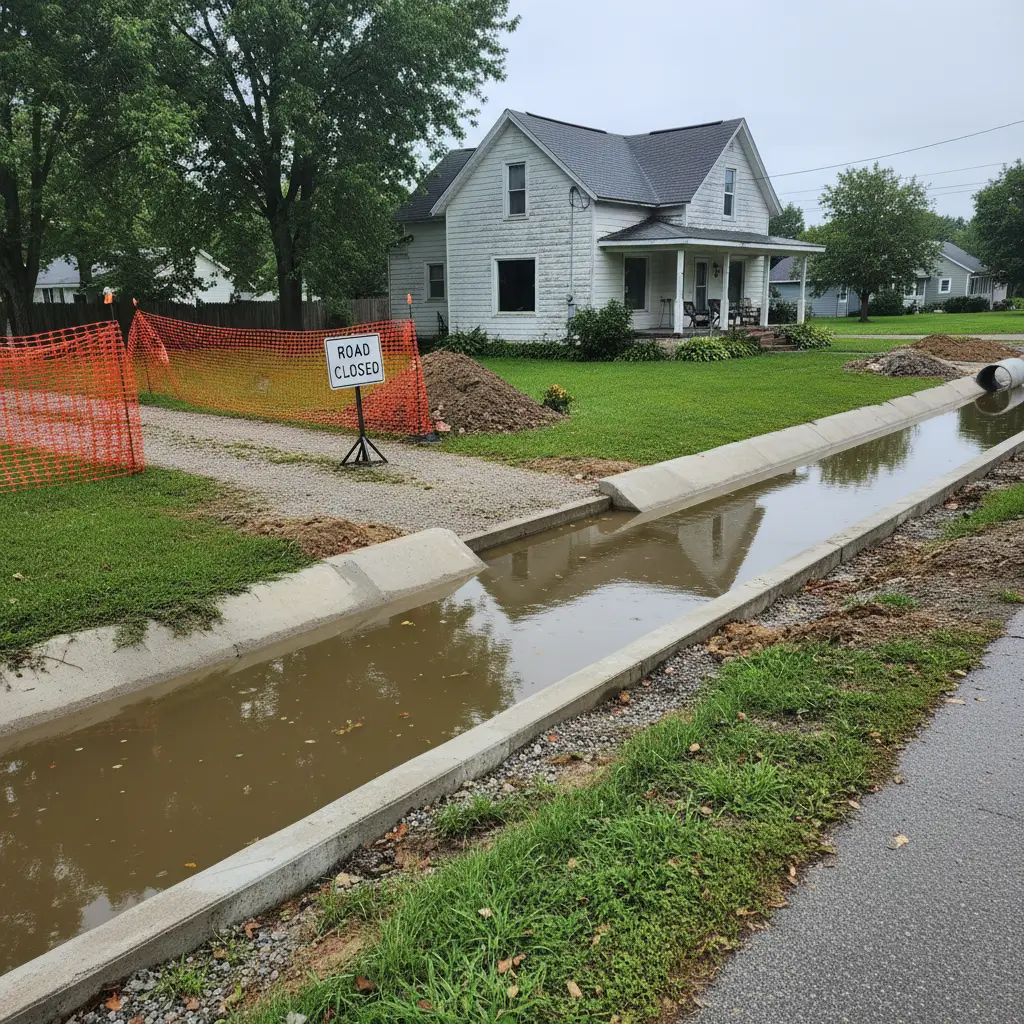
Physical triggers are among the most common grounds for an inverse condemnation claim. These include flooding caused by public drainage systems, sewer backups tied to municipal infrastructure, utility-related property damage, and construction or roadwork that physically impairs access or structural integrity.
\n
Recurring aircraft overflights — particularly near airports — also fall into this category when they cause repeated, measurable interference with property use. Courts generally require that the interference be direct, substantial, and traceable to a specific public project or government action.
\n
Regulatory Takings and Exactions
\n
Not all inverse condemnation claims involve physical contact. Regulatory takings occur when a government restriction eliminates or substantially reduces a property’s economic use without formal acquisition.
\n
This includes zoning changes that strip development rights, permit conditions that lack a clear nexus or proportionality to the project being approved, and regulations that render land effectively unusable. The legal threshold for a compensable regulatory taking is fact-specific and varies by jurisdiction, but investors and developers tracking land-use policy should monitor these closely, as they can directly affect asset value.
\n
How an Inverse Condemnation Case Is Evaluated
\n
Courts assess inverse condemnation claims using several overlapping legal factors. The analysis typically begins with whether the government action served a public use or benefited a public project — a threshold requirement in most jurisdictions.
\n
From there, causation is central. The owner must establish a direct link between the government’s action and the harm suffered. Intervening causes — such as pre-existing drainage issues or third-party conduct — can weaken this connection substantially.
\n
The claim must also involve a compensable property interest. Not every diminution in value or temporary inconvenience qualifies. Courts examine the economic impact on the specific property, whether the action interfered with reasonable investment-backed expectations, and the character of the government action itself.
\n
When claims fail, it is often due to weak causation, the absence of a cognizable property right, or the government’s ability to show the harm was incidental rather than a direct result of the public project. The burden of proof generally rests with the property owner.
\n
Compensation, Deadlines, and State-Specific Rules in Inverse Condemnation
\n
The primary remedy is just compensation — typically measured by the loss in fair market value, the cost to restore damaged property, or the diminution in value caused by the government action. Some jurisdictions also permit recovery of attorney’s fees or litigation costs in certain circumstances.
\n
Statute-of-limitations deadlines are a critical variable. Filing windows vary by state and, in some cases, by the type of claim or entity involved. Missing these deadlines typically bars recovery entirely, regardless of the merits.
\n
Forum also matters. Some inverse condemnation claims are filed in state court, others in federal court, depending on the constitutional basis and the jurisdiction. The choice of forum can affect procedural rules, discovery options, and available remedies.
\n
California deserves particular attention. Its courts have developed an extensive body of inverse condemnation law covering public entities, investor-owned utilities, and public works projects. California’s strict liability standard — which does not require proof of negligence in certain physical damage cases — makes its rules meaningfully different from those in many other states. Investors, lenders, and developers operating in California or evaluating California assets should factor this into their risk and title analysis.
\n
Frequently Asked Questions
\n
What is inverse condemnation in real estate?
\n
Inverse condemnation is a legal claim a property owner brings when a government agency or public-use entity effectively takes, damages, or substantially interferes with private property without starting a formal eminent domain case.
\n
How is inverse condemnation different from eminent domain?
\n
In eminent domain, the government initiates the taking and pays compensation through a formal process. In inverse condemnation, the owner files the lawsuit after the taking, damage, or loss of use has already occurred.
\n
What can trigger an inverse condemnation claim?
\n
Common triggers include flooding from public works, sewer or drainage damage, utility-related impacts, repeated low flights, road or construction damage, and land-use regulations or permit conditions that severely reduce property use or value.
\n
What must a property owner usually prove?
\n
Owners generally must show that government action or a public project caused a compensable invasion, damage, or taking of a property right, and that the harm is measurable. The exact legal test depends on the jurisdiction and claim type.
\n
What compensation is available in an inverse condemnation case?
\n
The primary remedy is just compensation, often based on fair market value loss, damage to the property, or loss of use. Some states may also allow recovery of certain fees or costs.
\n
Are inverse condemnation rules the same in every state?
\n
No. Procedures, deadlines, available remedies, and legal standards vary by state. California is especially important in this area because its courts have extensive inverse condemnation rules involving public entities, utilities, and public works.
“}