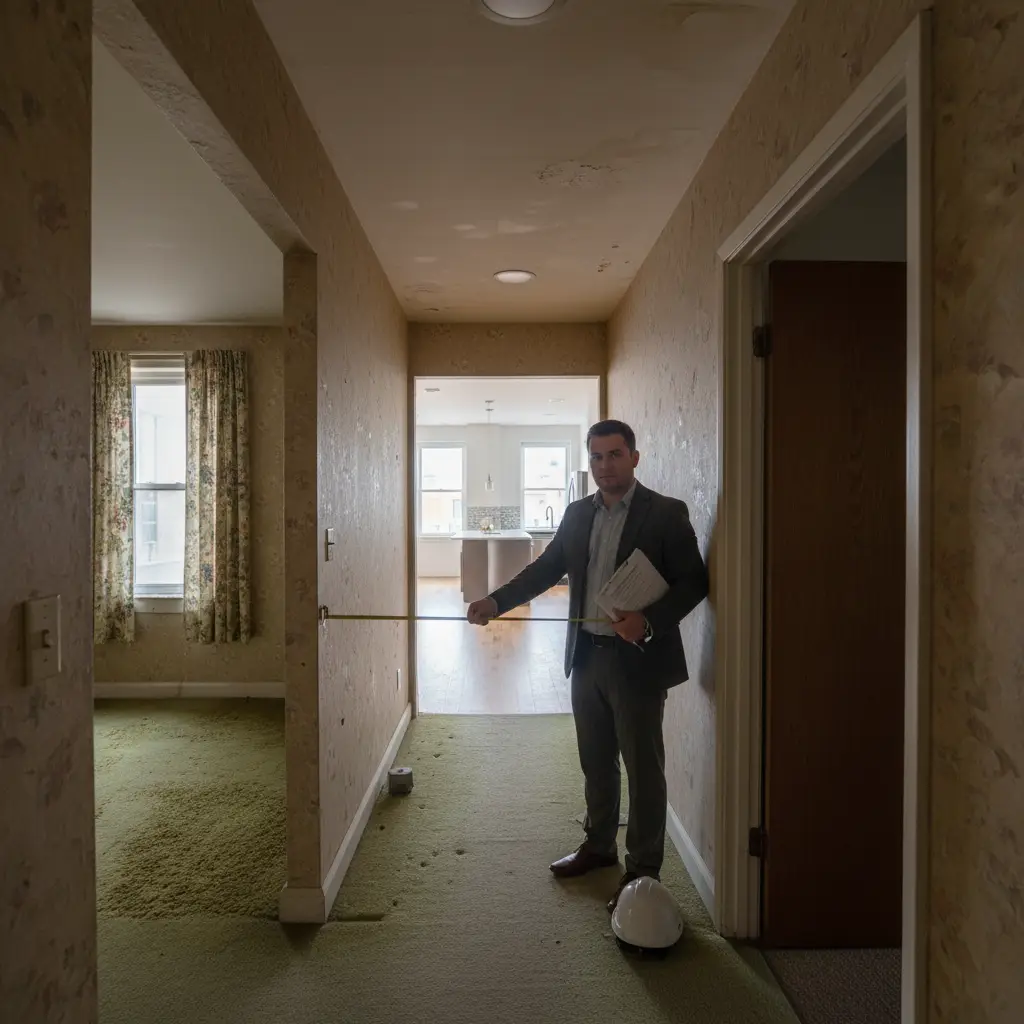
What Functional Obsolescence Means in Real Estate
Functional obsolescence is a reduction in a property’s value caused by outdated design, layout, features, or systems that diminish its usefulness or buyer appeal — even when the structure itself remains physically sound.
Unlike damage or decay, functional obsolescence is rooted in how well a property meets current market expectations. A home with a single bathroom in a two-bathroom market, or a commercial building with ceiling heights that no longer accommodate modern tenants, both reflect this type of value loss.
For investors and appraisers, identifying functional obsolescence is a critical step in accurately pricing, underwriting, or repositioning a property.
Functional Obsolescence vs. Physical and Economic Obsolescence
Understanding the distinctions between the three forms of obsolescence helps investors and analysts apply the right depreciation adjustments in any valuation model.
Physical obsolescence stems from wear, age, or damage — a deteriorating roof, cracked foundation, or worn flooring. It is directly tied to the condition of building materials and components.
Economic obsolescence, sometimes called external obsolescence, originates outside the property. Neighborhood decline, nearby industrial use, or zoning changes are common drivers. This form is generally incurable because it lies beyond the owner’s control.
Functional obsolescence, by contrast, is internal to the property itself. It reflects a mismatch between the property’s design or systems and what buyers or tenants currently expect. This distinction matters because functional issues can sometimes be corrected, while economic ones typically cannot.
Types of Functional Obsolescence
Curable Functional Obsolescence
Curable functional obsolescence refers to deficiencies where the cost to correct the issue is justified by the value the correction adds.
Common examples include replacing outdated plumbing fixtures, upgrading an aging HVAC system, or reconfiguring a minor layout issue. In each case, the expected increase in market value or rent potential meets or exceeds the renovation cost.
For investors, curable obsolescence often represents a value-add opportunity. The key metric is whether the dollar invested returns at least a dollar in value — and preferably more.
Incurable Functional Obsolescence
Incurable functional obsolescence describes deficiencies that are too costly or impractical to correct relative to the return they would generate.
A building with structurally embedded low ceilings, a fixed floor plan that cannot accommodate modern use, or a configuration that requires demolition to change — these are typically classified as incurable. The correction cost exceeds the recoverable value.
In appraisal practice, incurable functional obsolescence is measured by estimating the rent loss or market value discount attributable to the deficiency, then capitalizing or discounting that figure accordingly.
Superadequacy and Over-Improvement
A less obvious form of functional obsolescence is superadequacy — the condition where a property has features that exceed what the market demands or will pay for.
A single-family home with a commercial-grade kitchen in a modest neighborhood is a classic example. The improvement exists and is functional, but the market will not pay a premium for it. The result is a cost that cannot be fully recovered through resale.
Investors and developers encounter this most often in renovation projects where capital is deployed beyond the absorption capacity of the submarket. Recognizing superadequacy before purchasing or improving a property is as consequential as identifying deficiencies.
Examples in Residential and Commercial Properties
Functional obsolescence appears across all property types, though it manifests differently depending on the asset class.
In residential properties, common examples include:
- A home with only one bathroom in a market where buyers expect at least two
- Captive or pass-through bedrooms that lack privacy or direct hallway access
- Low ceiling heights relative to competing inventory
- Outdated electrical panels that cannot support modern appliances or EV charging
- Poor flow between living areas and kitchens in open-concept markets
In commercial properties, examples include:
- Column spacing too narrow for modern warehouse or retail racking systems
- Insufficient floor-to-ceiling clearance for logistics or industrial tenants
- Outdated HVAC or building management systems that do not meet tenant specifications
- Office layouts that cannot accommodate hybrid or collaborative work environments
- Loading dock configurations incompatible with current fleet sizes
In both cases, the core issue is the same: the property no longer aligns with what its market demands, and that gap translates into measurable value loss.
How Functional Obsolescence Affects Appraisal, Marketability, and Investment Returns
Functional obsolescence directly influences three dimensions of property performance: appraised value, time on market, and income potential.
In appraisals, obsolescence is treated as a form of depreciation within the cost approach. Appraisers estimate the loss in value attributable to the functional deficiency — either by comparing sales of similar properties with and without the issue, or by capitalizing the rent loss associated with the deficiency. The result is a downward adjustment to the property’s value conclusion.
In marketability, properties with functional obsolescence tend to attract a narrower pool of buyers or tenants. Longer days on market, more price reductions, and higher concessions are common outcomes.
For investment returns, functional obsolescence affects both the income and exit sides of the equation. On the income side, outdated layouts or systems can limit achievable rents or require increased tenant improvement allowances. On the exit side, buyers discount the price to reflect the cost and risk of correction — or move on to competing assets.
The cumulative effect can compress cap rates, reduce net operating income, and extend the payback period on capital already deployed.
How Owners, Buyers, and Investors Should Evaluate It
Evaluating functional obsolescence requires a structured approach, particularly when underwriting an acquisition or planning a capital improvement program.
Owners should periodically benchmark their properties against current market comparables. If competing assets offer features — updated systems, modern layouts, or higher ceiling heights — that the subject property lacks, that gap represents latent obsolescence risk that may already be affecting occupancy or achievable rent.
Buyers should identify functional deficiencies during due diligence, not after closing. This means reviewing floor plans, building systems, and lease comparables before finalizing underwriting. Each identified issue should be classified as curable or incurable, with an associated cost and value impact assigned to it.
Investors should assess whether the cost to cure is within budget, whether the submarket will absorb the improved value, and whether remaining functional risk is appropriately reflected in the purchase price. For value-add strategies, curable functional obsolescence is often the core thesis. For core or stabilized acquisitions, uncorrected functional obsolescence should be treated as a pricing discount, not an afterthought.
Functional obsolescence is a measurable variable — not a vague concern. Investors who quantify it systematically are better positioned to underwrite accurately, negotiate effectively, and manage asset risk over the holding period.
FAQ
What is functional obsolescence in real estate?
Functional obsolescence is a loss in property value caused by outdated design, layout, features, or systems that reduce usefulness or buyer appeal, even if the property is still structurally sound.
How is functional obsolescence different from physical and economic obsolescence?
Physical obsolescence comes from wear and tear, such as an aging roof or damaged flooring. Economic obsolescence comes from outside factors, such as neighborhood decline or zoning changes. Functional obsolescence is tied to the property itself, such as an inefficient floor plan or obsolete building systems.
What are common examples of functional obsolescence?
Examples include a home with only one bathroom in a market where buyers expect two, captive bedrooms, low ceiling heights, outdated HVAC or electrical systems, poor commercial layouts, and over-improvements that do not match market demand.
What is the difference between curable and incurable functional obsolescence?
Curable functional obsolescence can be fixed at a cost that is justified by the value added, such as replacing outdated fixtures or reconfiguring a minor layout issue. Incurable functional obsolescence is too expensive or impractical to correct relative to the expected return.
How does functional obsolescence affect investors and appraisals?
It can reduce market value, slow leasing or sales, increase capital expenditure needs, and lead to appraisal adjustments. Investors use it to estimate renovation feasibility, rent potential, resale risk, and whether a property is competitively positioned in its submarket.