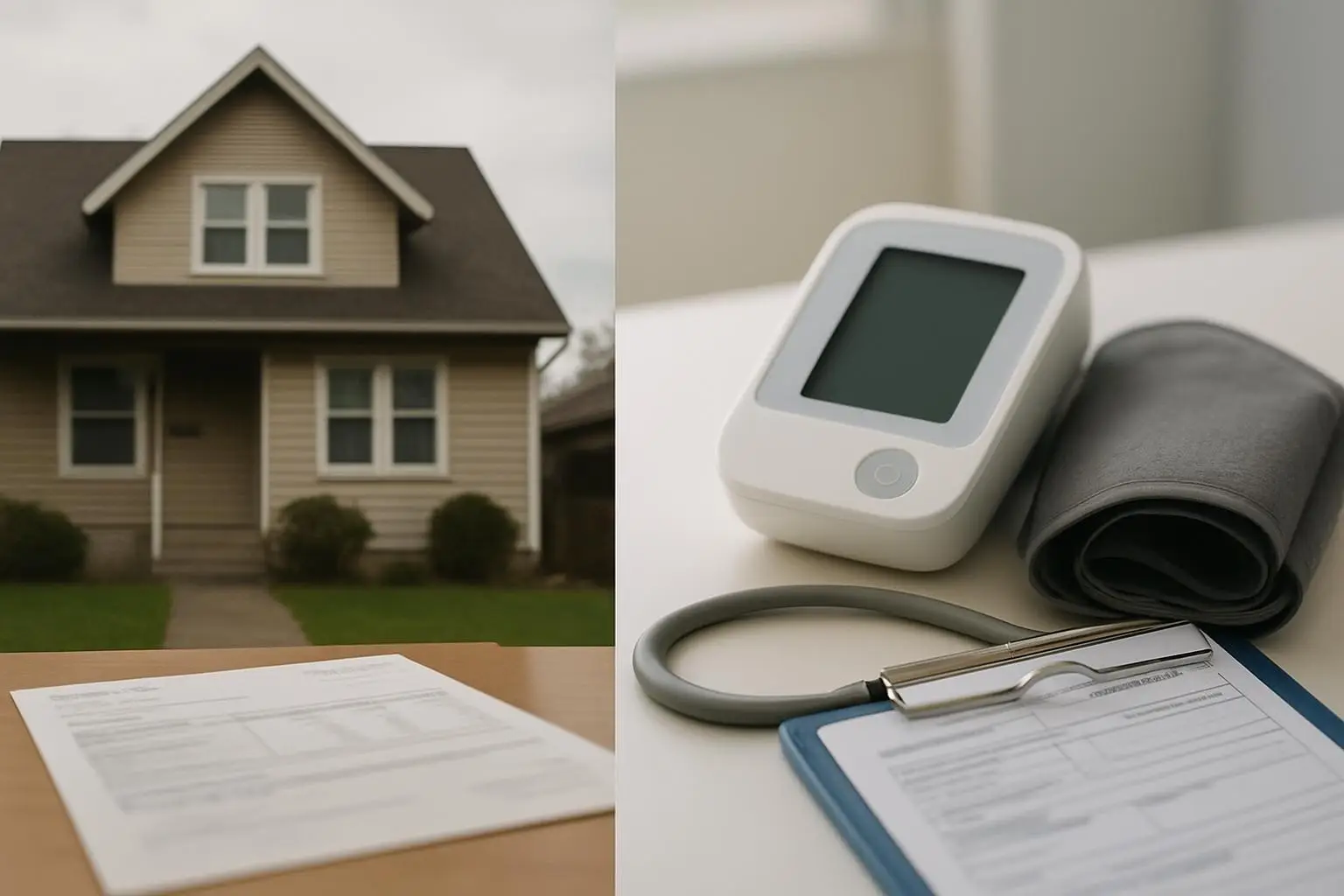
Housing burden is one of the most practical indicators of financial pressure on households, and it carries weight far beyond personal budgets. For investors, data enthusiasts, and real estate professionals, it signals affordability trends, market stability, and even public health outcomes. Below, we break down what housing burden means, how it is measured, and how recent research connects it to vascular risk and dementia-free survival.
Understanding What Housing Burden Means
Housing burden refers to the share of a household’s income that goes toward housing costs. These costs typically include rent or mortgage payments, property taxes, insurance, and utilities.
When housing consumes a large portion of income, less remains for food, healthcare, savings, and other essentials. As a result, housing burden serves as a core measure of affordability in any given market.
For real estate and investment audiences, it also functions as a demand-side signal. High burden levels often point to constrained purchasing power and potential shifts in rental or ownership patterns.
How Housing Burden Is Measured
Housing burden is measured as a ratio of housing costs to gross household income. Analysts usually express it as a percentage.
The standard calculation divides total monthly housing costs by total monthly income, then multiplies by 100. For owners, this includes mortgage principal, interest, taxes, and insurance. For renters, it includes rent plus applicable utilities.
Data sources such as the U.S. Census Bureau and the American Community Survey report these figures regularly. Consequently, investors and analysts can track burden rates across regions, income tiers, and time periods.
What Counts as High Housing Burden
A household is generally considered “cost burdened” when it spends more than 30% of income on housing. When that figure exceeds 50%, the household is classified as “severely cost burdened.”
These thresholds are widely used in policy and market analysis. Therefore, they provide a consistent benchmark for comparing affordability across different areas.
For real estate stakeholders, rising shares of cost-burdened households can indicate affordability stress, which may influence vacancy rates, pricing, and development strategy.
Connecting Housing Burden , Mike Burden, and Vascular Risk
Beyond economics, housing burden has been studied as a social determinant of health. Chronic financial strain from housing costs is associated with elevated stress, which can contribute to vascular risk.
Vascular risk factors include high blood pressure, poor circulation, and related cardiovascular conditions. Research suggests that sustained economic pressure may correlate with these outcomes over time.
It is worth noting that “Mike Burden” refers to an individual associated with the 2018 film *Burden*, and is distinct from the concept of housing burden. The shared term can cause confusion, so this distinction helps keep the discussion clear.
Housing Burden and Dementia-Free Survival
Emerging studies have examined whether housing burden influences long-term cognitive health. Because vascular health is closely tied to brain function, housing-related stress may play an indirect role.
Dementia-free survival refers to the length of time a person lives without developing dementia. Some research links chronic financial and vascular strain to shorter dementia-free periods.
As a result, housing affordability is increasingly viewed not only as an economic measure but also as a factor relevant to public health and long-term well-being.
Housing Burden in the 2018 Burden Study
The 2018 Burden Study examined relationships between financial stress, vascular risk, and cognitive outcomes. It used housing burden as one variable among several economic indicators.
Within this research, higher housing burden was analyzed alongside measures of vascular health and survival data. The study contributed to the growing body of evidence connecting economic strain to health metrics.
For data enthusiasts, this work illustrates how housing affordability data can be integrated into broader health and demographic analysis.
Burden (2018 Film) Disambiguation
To avoid confusion, it is important to distinguish housing burden from *Burden*, a 2018 film. The movie is a drama based on real events and is unrelated to housing economics or health research.
The overlap in terminology is purely linguistic. Consequently, references to “Burden” in entertainment contexts should not be mixed with housing burden data or the 2018 Burden Study.
This distinction ensures that economic, health, and cultural uses of the term remain clearly separated for research and analysis.