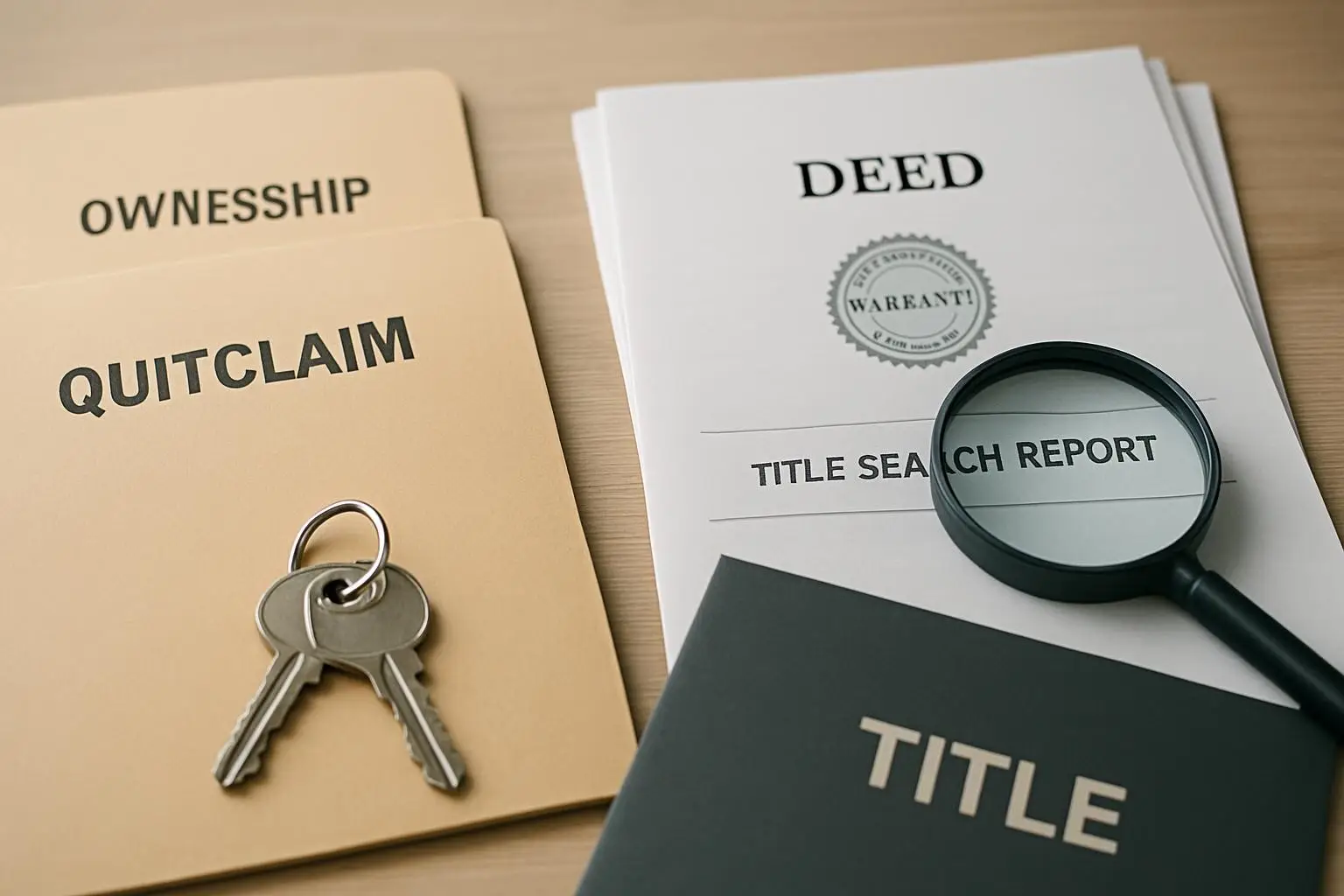
Choosing between a quitclaim deed and a warranty deed comes down to one core question: how much title protection does the transaction actually need? For investors, that answer can shape your risk exposure, your financing options, and your exit strategy. Below, we break down what each deed does, where the real risks sit, and when each type typically makes sense.
Quick Definitions
Before comparing risk, it helps to clarify what each deed promises—and what it doesn’t.
What does a warranty deed typically promise the buyer?
A warranty deed generally provides the strongest title assurances available to a buyer. In most cases, the grantor warrants that they hold clear title, that they have the right to transfer it, and that they’ll defend the buyer against future claims tied to prior ownership.
In practice, this means the grantor is standing behind the title. If a defect surfaces later—such as an undisclosed lien or a competing ownership claim—the warranty terms may hold the grantor responsible, subject to the deed language and local law.
What does a quitclaim deed actually transfer (and what doesn’t it)?
A quitclaim deed transfers whatever interest the grantor currently holds—nothing more. Importantly, it does not promise that the interest is clean, marketable, or even that the grantor owns anything at all.
As a result, the buyer accepts the property “as is” from a title standpoint. If the grantor’s interest turns out to be limited or flawed, the quitclaim deed typically offers no recourse against the grantor.
Side-by-Side Comparison (Title Protection & Risk)
The table below highlights how the two deed types differ across the factors that matter most to investors.
| Factor | Warranty Deed | Quitclaim Deed |
|---|---|---|
| Title guarantees | Broad warranties of clear, defensible title | No warranties; transfers only current interest |
| Buyer risk level | Lower, due to grantor assurances | Higher, since risk shifts to the buyer |
| Grantor responsibility for defects | Can extend to prior ownership issues | Generally none beyond the interest conveyed |
| Common use case | Arm’s-length sales, financed purchases | Transfers between known parties |
| Lender acceptance | Typically preferred | Often scrutinized or declined |
| Title insurance alignment | Usually straightforward | May require additional review |
What This Means for Buyers and Sellers
The deed type you choose directly affects who carries the title risk and what diligence is required to close with confidence.
How title defects and legal responsibility usually work
With a warranty deed, responsibility for certain title defects can shift back toward the grantor. Depending on the deed terms and jurisdiction, the buyer may have a legal pathway to recover losses if a covered defect appears.
With a quitclaim deed, the situation reverses. Because the deed typically carries few or no warranties, responsibility generally falls on the buyer—even for issues that existed before the transfer.
Key due diligence steps before accepting a quitclaim deed
Since a quitclaim deed offers limited protection, your own diligence becomes the safeguard. At a minimum, consider the following steps:
- Pull and review current ownership records to confirm the grantor’s actual interest.
- Search for liens, judgments, and other encumbrances attached to the property.
- Obtain or review a title report, and confirm how (or whether) title can be insured.
- Engage a local real estate attorney or title professional to review the transaction.
Taken together, these steps help you quantify the risk you’re actually accepting before you sign.
When Each Deed Type Is Typically Used
Each deed serves a distinct purpose, and the right fit usually depends on the relationship between the parties and the level of assurance required.
Higher-assurance scenarios where warranty deeds are common
Warranty deeds are standard in arm’s-length transactions where the buyer needs strong protection. Typical examples include:
- Traditional property sales between unrelated parties.
- Financed purchases where a lender requires title assurances.
- Transactions backed by title insurance underwriting.
In these cases, the buyer and lender both benefit from the added layer of accountability.
Lower-friction transfer scenarios where quitclaim deeds are common
Quitclaim deeds tend to appear where parties already trust each other or where the transfer is administrative. Common examples include:
- Transfers between family members or related entities.
- Moving property into a trust or LLC you control.
- Clearing clouds on title, such as removing a former spouse’s claim.
Because speed and simplicity often matter more than warranties in these situations, a quitclaim deed can be the practical choice.
Decision Checklist for Investors
Before selecting a deed type, run through the following checklist to align the instrument with your risk tolerance and deal structure:
- Relationship: Are you dealing with a known party or an arm’s-length counterparty?
- Financing: Does a lender require specific deed or title standards?
- Title insurance: Can the title be insured under the proposed deed type?
- Known defects: Have you identified liens, encumbrances, or ownership gaps?
- Risk tolerance: Are you prepared to absorb title risk without grantor recourse?
- Exit strategy: Will the deed type affect resale or refinancing later?
- Professional review: Have you confirmed the approach with local counsel or a title professional?
Working through these points helps ensure the deed supports—rather than undermines—your investment goals.
FAQ: Quitclaim Deed vs. Warranty Deed
Does a quitclaim deed guarantee clean title?
No. A quitclaim deed generally conveys whatever interest the grantor has without making broad assurances about title quality. For investor-grade risk management, you should assume there may be unresolved title issues unless verified.
Can a quitclaim deed be used to sell a property?
It can be used to transfer ownership interest, but acceptance may depend on the buyer’s financing, the buyer’s lender requirements, and title/recording practices. If you’re selling to a financed buyer, confirm lender and title-insurance acceptance before proceeding.
Will a mortgage lender accept a quitclaim deed?
Often lenders prefer deed types and title assurance standards that align with underwriting and insurability requirements. Many lenders may be hesitant with quitclaim deeds because of the lack of title warranties—check with the specific lender and title insurer.
Are warranty deeds always better than quitclaim deeds?
In most standard transactions, warranty deeds provide stronger title assurances than quitclaim deeds, which can reduce buyer risk. However, the “best” choice still depends on the transaction context, your due diligence, and local legal/practice requirements.
Who is responsible if the title is defective?
With a warranty deed, title warranties can shift responsibility for certain defects back toward the grantor (subject to deed terms and jurisdiction). With a quitclaim deed, responsibility generally shifts more heavily to the buyer, because the deed typically provides fewer or no warranties.
What should I verify before relying on a quitclaim deed?
Verify ownership records, check for liens/encumbrances, review how title is insured, and confirm the grantor’s actual interest. For investor decisions, pairing your review with title insurance and professional counsel is commonly prudent.
How much does a deed transfer typically cost?
Costs vary by location and transaction details. Common components include recording/filing fees and typical closing-related charges. If you’re budgeting for an investment, get local estimates and confirm what your county/state requires.
What fees are commonly associated with property deed transfers?
Recording/filing fees are common, and additional closing charges may apply depending on the transaction structure. Exact fee categories depend on jurisdiction and whether other services (e.g., title work) are needed.
What factors affect the total cost of a warranty deed vs. a quitclaim deed?
Total costs usually depend more on local recording requirements, title work, and transaction complexity than on the deed label alone. Warranty vs. quitclaim can influence how title insurance underwriting and risk are handled, which may affect overall expenses.
Is the cost the same everywhere for quitclaim vs. warranty deeds?
No. Recording fees, transfer practices, and closing workflows differ by jurisdiction, so costs are not uniform nationwide.
Note: Deed effects and obligations can vary by jurisdiction. For investment or legal decisions, consult a qualified local real estate attorney and/or title professional.